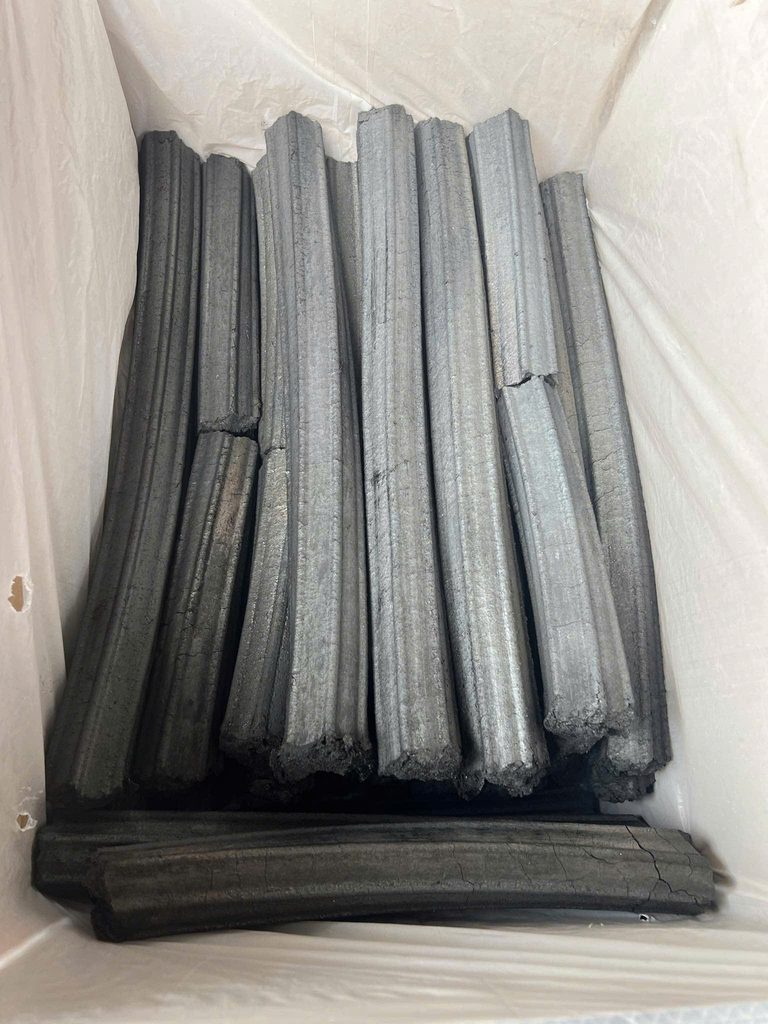
Sawdust Charcoal Wholesale Price: B2B Sourcing & Cost Guide
Evaluating the sawdust charcoal wholesale price requires looking beyond basic per-ton quotes to account for raw material grades, carbonization standards, and FOB logistics.
As a leading Vietnam export manufacturer, AKAC Charcoal provides this complete sourcing guide to help global importers analyze cost drivers, quality specs, and landed import expenses.
1. Sawdust Charcoal Wholesale Price Benchmarks (FOB Vietnam Port)
Export pricing for sawdust briquette charcoal is directly benchmarked on a Free On Board (FOB) basis from major shipping ports in Vietnam (such as Haiphong Port or Cat Lai Port). Wholesale baseline quotes are evaluated per metric ton (MT) based on full container load (FCL) shipments, typically calculated for standard 20ft or 40ft High Cube (40HC) containers.
Price variations across Vietnam manufacturers stem from critical technical specifications, including fixed carbon percentage, moisture content, mechanical density, and burn duration. Furthermore, international trade transactions strictly follow standardized delivery responsibilities regulated under ICC Incoterms 2020, where FOB quotes cover all inland transportation, export packaging, and customs clearance fees at the loading port prior to ocean vessel dispatch.
Below is a realistic wholesale market breakdown across core product grades and custom packaging specifications for bulk export buyers:
| Product Grade | Price Range (FOB Vietnam) | Key Specifications | Primary Target Markets |
|---|---|---|---|
| Premium Grade A+ | More than $750 / MT | Fixed Carbon > 85%, Ash < 4%, Burn time 5+ hours | Japan, Korea (Korean BBQ Chains), Middle East, Australia, Europe |
| Premium Grade A | More than $700 / MT | Fixed Carbon >80%, Ash 4 – 6%, Burn time 4 – 4.5 hours | Middle East, Australia, Europe |
| Standard Grade A | More than $650 / MT | Fixed Carbon 70 – 79%, Ash 5 – 7%, Burn time 3.5 hours | Regional Wholesalers, Industrial |
| OEM Custom Packaging | From $10 – $50 / MT | 5-ply cartons, inner PE bags, private branding | Retail Outlets & Restaurant Franchises |
2. Production Economics: What Drives Manufacturing Costs?
To understand why prices vary between manufacturers, importers must examine the core production economics behind export-grade sawdust charcoal:
Raw Material Sourcing (35–40% of Total Cost)
The quality of the raw sawdust determines the final product density and ash content.
- Charcoal made from 100% natural hardwood sawdust (such as Acacia or Eucalyptus) yields higher mechanical strength and minimal ash.
- Softwood or mixed sawmill waste is cheaper but results in higher ash content and fragile briquettes.
High-Pressure Extrusion & Carbonization Energy
Extruding raw sawdust into high-density briquettes without chemical binders requires heavy mechanical force and temperatures exceeding 300°C.
Subsequent carbonization in specialized kilns requires 10 to 14 days of controlled pyrolysis. Fully carbonized charcoal achieves a higher fixed carbon percentage (>80%), incurring higher energy and operational labor costs.
Yield Loss & Quality Sorting
During the cooling and sorting phase, uncarbonized or fractured briquettes are removed. Export-grade orders require strict sizing (typically 10–40 cm pieces), and discarding sub-standard pieces adds to the total manufacturing cost per finished ton.
3. Regional Quality Demands & Pricing Impact
Different destination markets enforce distinct quality thresholds, which directly influence manufacturing specifications, packaging compliance, and total wholesale FOB prices:
3.1 Korean & Japanese Markets (Premium BBQ Grade)
Buyers in South Korea and Japan mandate strict premium quality standards for restaurant-grade charcoal:
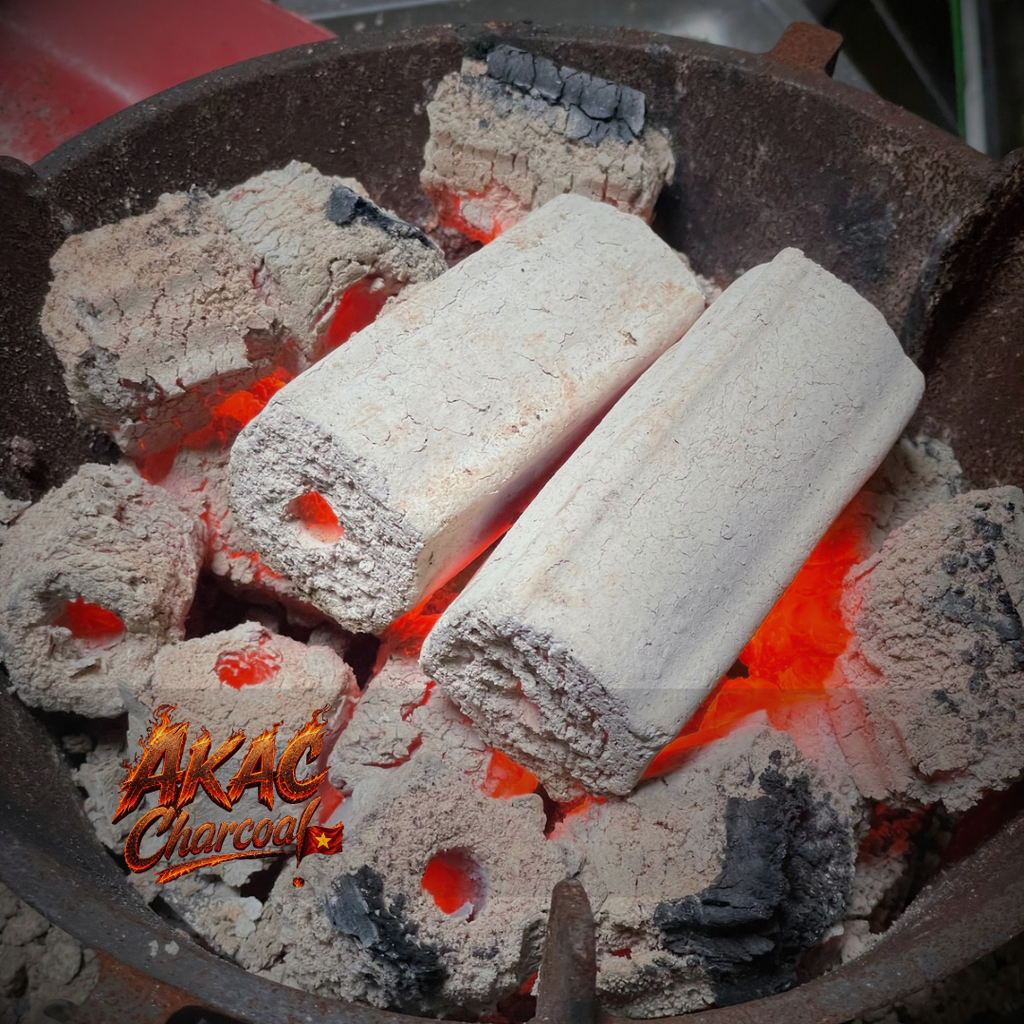
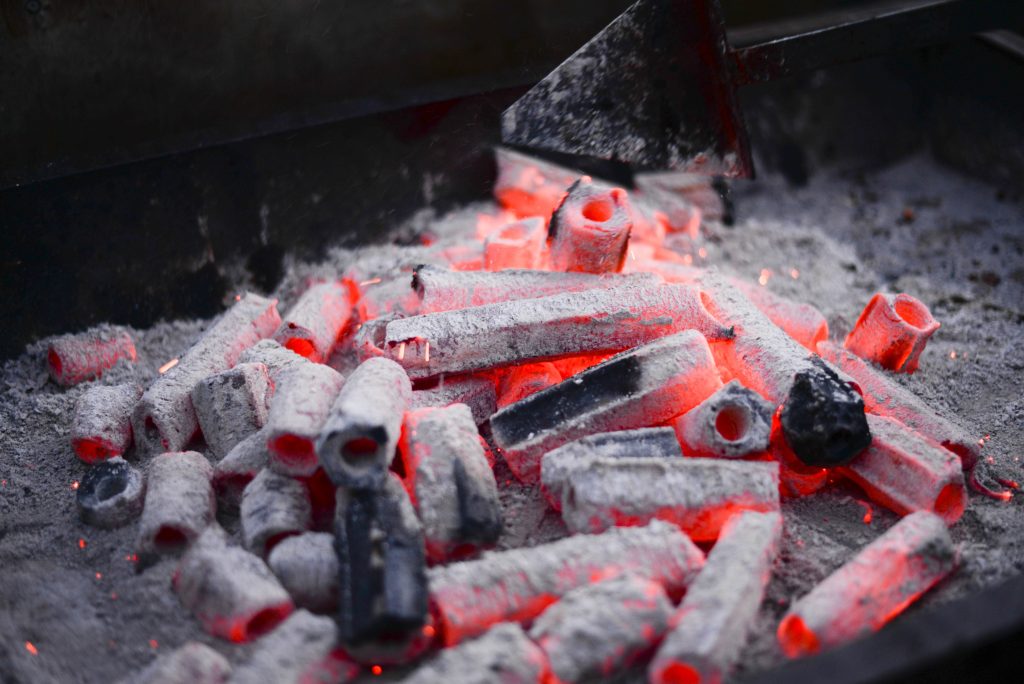
- Burn Characteristics: Zero smoke, zero odor, high heat output (>7,500 kcal/kg), and extended burning time (4–6 hours).
- Ash Specification: Pure white ash with content strictly <3–4%.
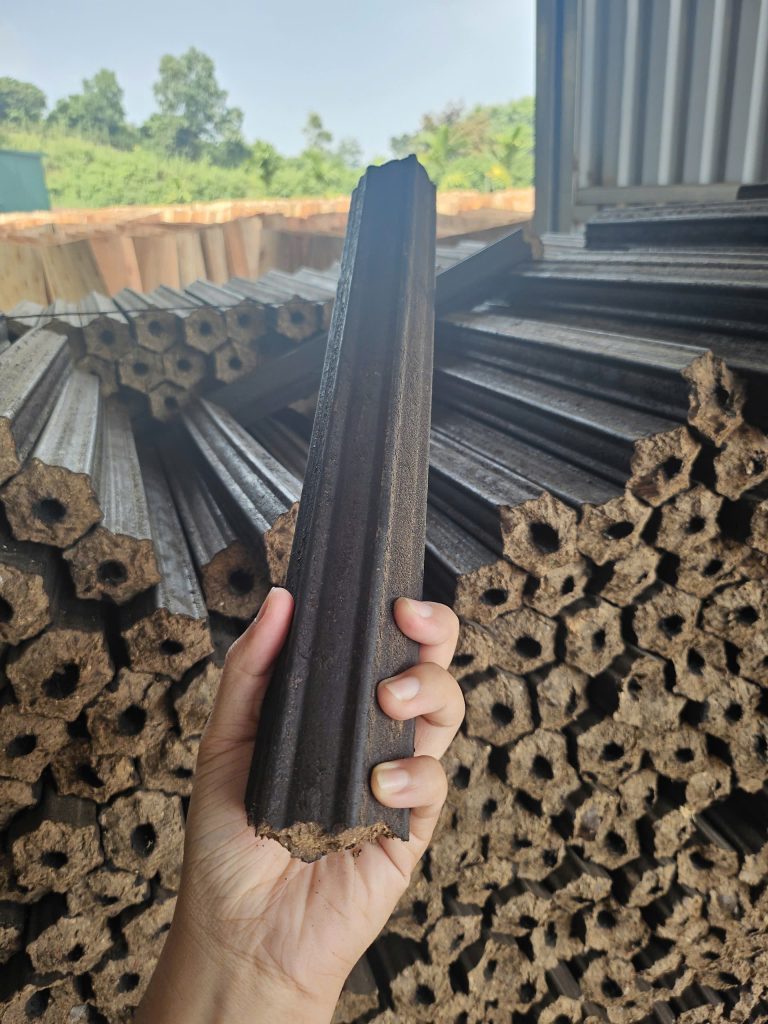
- Price Impact: Importers pay a premium for uniform hexagonal shapes and high mechanical density that prevents cracking.
3.2 Middle Eastern Markets (Shisha & Heating Grade)
Importers across Dubai, Saudi Arabia, and regional hubs focus on thermal stability and maritime transit endurance:
- Performance: Quick ignition, stable ember heat, and 100% spark-free combustion for hookah and indoor heating.
- Packaging Requirements: Heavy-duty moisture sealing (inner plastic lining + outer master carton) to prevent degradation during humid sea transit.
3.3 European & Western Markets (Retail & Industrial BBQ)
Western buyers emphasize environmental compliance, legal traceability, and chemical safety:
- Documentation & Safety: Requires strict chemical safety documentation (MSDS) and REACH/SVHC compliance.
- Sustainability: High demand for FSC-certified timber sources and custom consumer-ready retail packaging.
4. Operational ROI: Sawdust Charcoal Vs. Alternative Fuels
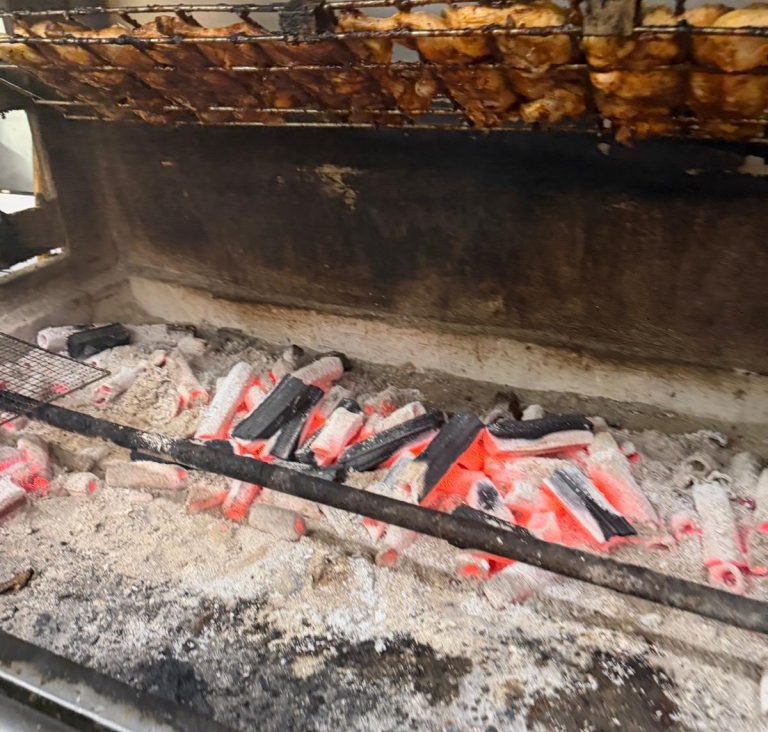
While natural lump wood charcoal may appear cheaper on an initial per-ton quote basis, its rapid combustion rate makes it significantly more expensive per operational hour in commercial BBQ kitchens and restaurant chains.
Because premium sawdust briquette charcoal burns up to 3 times longer than traditional lump wood charcoal with steady, intense heat output, commercial kitchens consume up to 30–40% less total fuel weight per shift. This structural shift in fuel efficiency delivers a superior return on investment (ROI) for global food service distributors.
4.1 Fuel Performance & Cost Efficiency Comparison
| Fuel Type | Burn Duration | Heat Output (kcal/kg) | Ash Content | Hourly Operational Cost |
|---|---|---|---|---|
| Sawdust Briquette Charcoal | 4 – 6 Hours | >7,500 kcal/kg | <3–4% (White Ash) | Lowest (High Efficiency) |
| Natural Lump Wood Charcoal | 1.5 – 2.5 Hours | 6,000 – 6,800 kcal/kg | 5 – 8% (Dark Ash) | High (Frequent Refill Needed) |
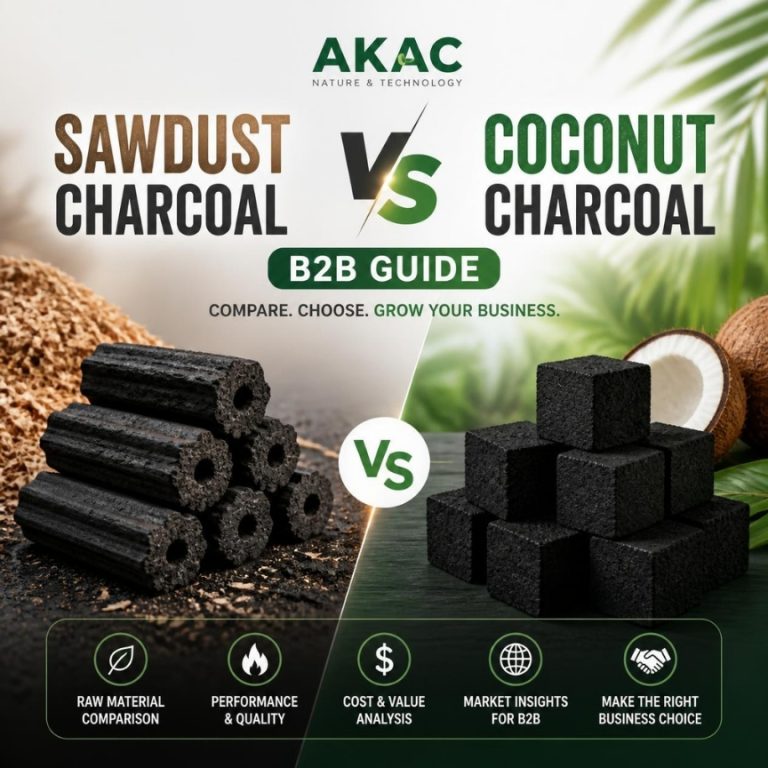
| Coconut Shell Shisha Charcoal | 2.5 – 3.5 Hours | 7,000 – 7,300 kcal/kg | <2.5% | Moderate to High |
4.2 Key Financial Savings for Commercial Kitchens
- Reduced Refill Labor: Steady ember heat eliminates constant refueling during rush hours.
- Lower Ash Disposal Costs: Minimal ash volume reduces restaurant waste handling and clean-up time.
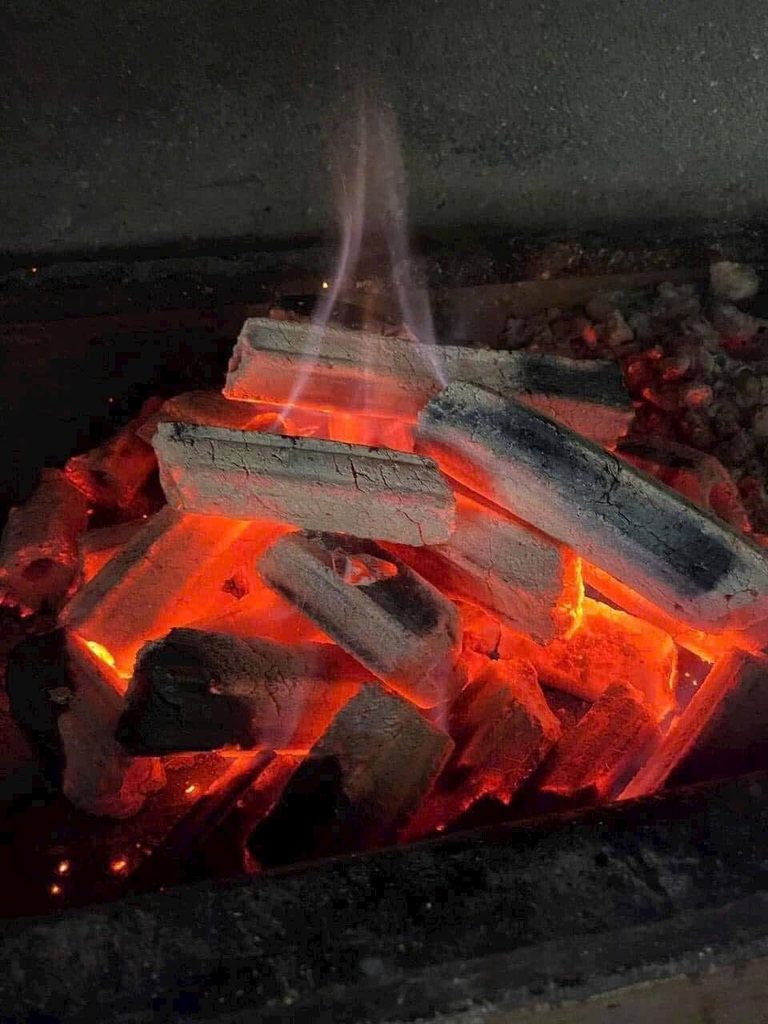
- Consistent Meat Searing: Uniform heat distribution prevents flare-ups, preserving food quality and taste consistency.
To explore export-ready specifications for commercial grilling, view AKAC’s premium sawdust charcoal range.
5. How Importers Can Optimize Total Landed Sourcing Costs
To achieve the lowest landed cost per metric ton, B2B buyers must implement strategic procurement and logistics measures when importing charcoal from Vietnam:
5.1 Maximize 40ft HC Container Payload
Ocean freight represents a significant portion of landed import expenses. Floor-loading a 40ft High Cube (40HC) container allows manufacturers to fit up to 26–28 Metric Tons of packed sawdust charcoal (versus only ~13–15 Tons in a 20ft container). Maxing out container weight capacity significantly lowers the ocean freight cost per kilogram.
5.2 Standardize Dimensions to Avoid Tooling Fees
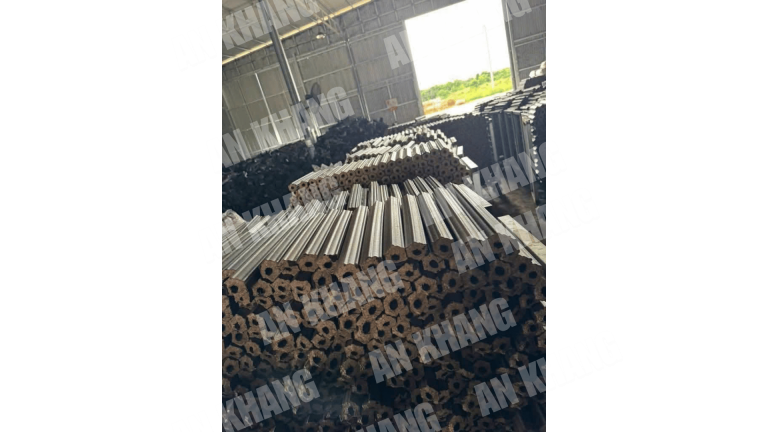
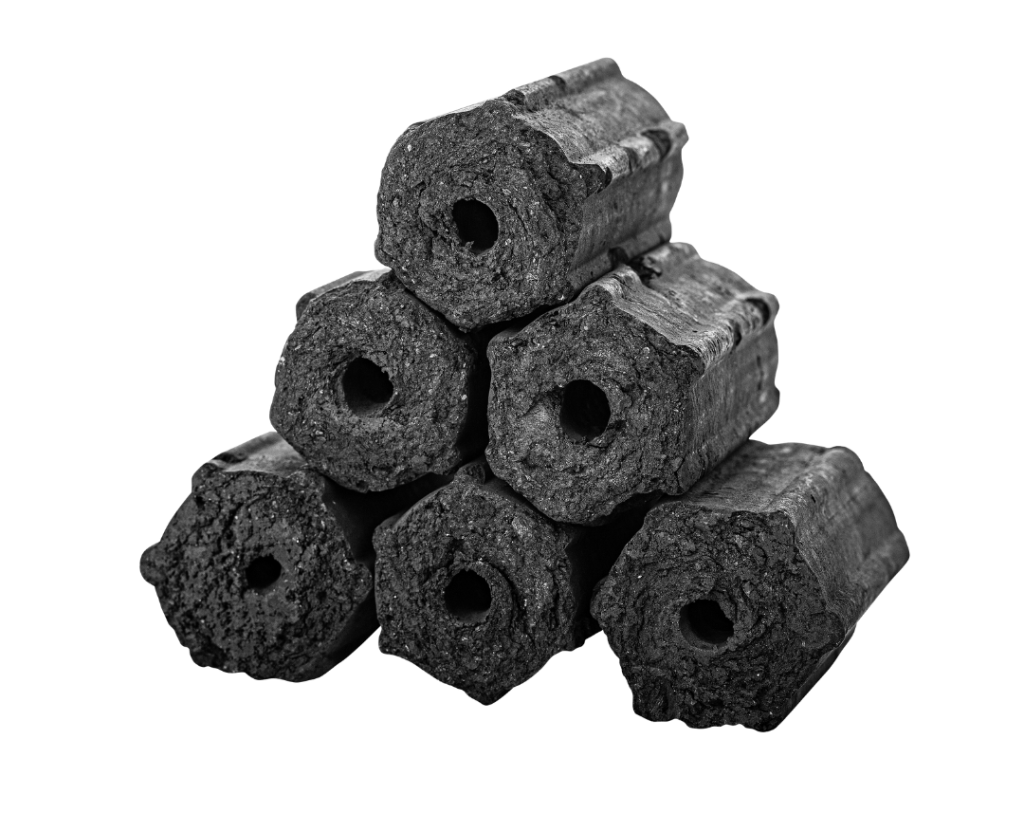
Ordering standard hexagonal specifications (outer diameter 3.8–4.0 cm with a center hole of 1.0–1.2 cm) utilizes existing active production molds. Requesting custom geometric molds or non-standard lengths introduces extra tooling fees and prolongs manufacturing lead times.
5.3 Order During Off-Peak Shipping Seasons
Locking in container shipping schedules during non-peak ocean freight periods helps buyers avoid steep Peak Season Surcharges (PSS) and port congestion delays. Importers can monitor global shipping benchmarks via the Xeneta Ocean Freight Index to plan order timing effectively.
5.4 Consolidate OEM Packaging Design
Custom-printed 5-ply cartons with inner PE moisture bags protect charcoal quality during long sea transit. Consolidating packaging print runs for bulk orders (e.g., 5,000+ custom boxes) drastically reduces per-box printing costs.
6. Frequently Asked Questions (B2B Procurement)
What Is The Typical Minimum Order Quantity (MOQ) For Wholesale Pricing?
The standard MOQ for factory-direct export pricing is one 20ft container (approx. 14–15 Metric Tons). However, ordering a full 40ft High Cube container (26–28 Metric Tons) yields the lowest wholesale rate per kilogram due to optimized ocean freight distribution.
Can We Request Private Label OEM Packaging For Wholesale Orders?
Yes. AKAC Charcoal Vietnam offers full OEM custom printing services for 5kg, 10kg, and 12kg master cartons, complete with inner PE plastic liners to protect against maritime humidity.
What Export Documentation Is Provided With Wholesale Orders?
Every bulk shipment includes a Bill of Lading (B/L), Commercial Invoice, Packing List, Certificate of Origin (C/O), Material Safety Data Sheet (MSDS), and Self-Heating Test (SHT) certification compliant with IMO Maritime Safety Regulations.
Request Updated Wholesale Quotes From AKAC Charcoal
AKAC Charcoal Vietnam manufactures and exports high-density sawdust briquette charcoal directly from our factory lines. We provide transparent wholesale pricing, flexible OEM packaging options, and full export compliance for global distributors and commercial suppliers.
Contact our export sales department to request a current FOB/CIF quotation, laboratory test reports, or a free sample shipment for technical evaluation.